
Follow ingredient usage
Connect supplier lots to the batches in which they were consumed.
Food processing
Food manufacturers need to coordinate ingredients, production, packaging, and dispatch. Start with how you identify materials and batches, then define the records needed to review stock, shelf life, and production costs.
Built around your business
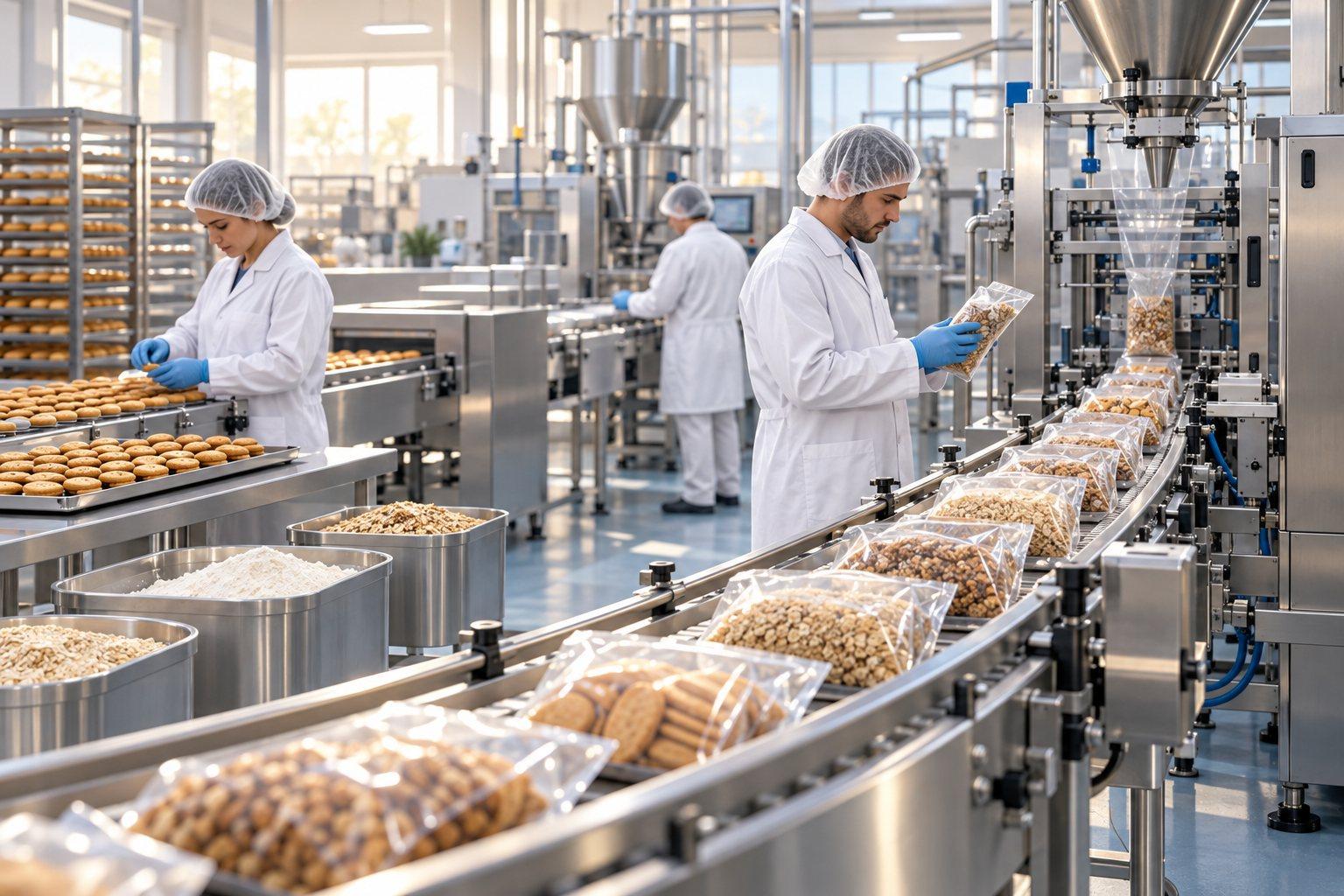
Food production connects ingredients, recipes, batches, packaging, and delivery dates. A consistent batch record helps the team see which materials were consumed, what was produced, which stock is awaiting release, and where finished goods were dispatched.
Connect supplier lots to the batches in which they were consumed.
Review dated stock when allocating orders and investigating ageing inventory.
Compare ingredient and packaging usage with saleable output and rejects.
Solution capabilities to scope
Build the scope around the records your team uses, the decisions it makes, and the exceptions it needs to manage.
01 / SOLUTION AREA
Discuss ingredient records, production recipes or bills of materials, quantities, and substitutions your process requires.
02 / SOLUTION AREA
Define batch references, date records, stock rotation, and traceability needs across receipts, production, and dispatch.
03 / SOLUTION AREA
Map ingredient consumption, finished output, packing materials, rejects, and other production losses.
04 / SOLUTION AREA
Review quality-check records, release decisions, customer orders, and the documents that accompany deliveries.
Recommended starting point
Review the workflow with LITPL before choosing the software. Core finance, purchasing, inventory, and sales can form the ERP foundation; sector-specific processing, quality, costing, and equipment connections may need configuration, add-ons, or custom development.
Explore the solution approach ↗An example operational workflow
Follow a typical transaction through the business. We adapt the sequence, approvals, and handovers to your operation during discovery.
Capture supplier lots, receipt quantities, date information, and inspection status before making ingredients available for production.
Key record
Ingredient lot record
Select the recipe or bill of materials, batch quantity, and approved ingredients; record authorized substitutions where required.
Key record
Batch plan and ingredient issue
Record consumption, finished output, rejects, and quality-check results against the batch.
Key record
Production and release record
Connect packaging consumption, pack sizes, batch identification, and production or expiry dates to finished goods.
Key record
Dated finished-stock record
Select released batches using the agreed stock-rotation rules and retain the link to customer delivery documents.
Key record
Batch-to-customer dispatch trail
Reporting priorities
Agree report definitions, date ranges, ownership, and source transactions before implementation. Use these industry-specific views as a starting point for your reporting scope.
Implementation approach
Agree the scope and acceptance criteria first, then prepare the data and people who will run the process.
Walk through a real transaction with your operations and accounts teams. Agree the priorities, exceptions, and reports.
Confirm product fit, responsibilities, approvals, and data fields. Scope any add-ons, custom workflows, and integrations.
Clean and map master records, opening stock, balances, and active transactions. Reconcile the data before migration.
Run representative transactions and exceptions with your users. Verify calculations, reports, access, and operating procedures.
Agree the cutover plan and support arrangements. Review early transactions and resolve issues with the responsible team.
Before you decide
Define the links from supplier lots through production and packing to customer deliveries, then test those links with sample transactions. Traceability reports, quality approvals, and recall procedures need an agreed scope and validation with your team.
The scope depends on your users, locations, opening data, approvals, reporting, and integrations. We review a representative workflow and agree what uses standard functionality, what needs configuration, and what needs additional development before preparing the proposal.
Batch & tank records · Yield & by-products · Packing & dispatch
Bulk materials · Bagged & bulk stock · Dispatch & billing
Grades & dimensions · Production & scrap · Weight-based dispatch
Batch & brew records · Packaging & empties · Excise & distributors